
Barely a week goes by without a new manifestation of the threat from cyber-attacks.
This week, there’s been an attack on refrigerators and freezers storing frozen food in supermarkets in Belgium, Luxembourg and other European countries. The freezers were sent into Defrost mode, which made them warm up. A similar attack in France last month affected hundreds of stores, who had to throw the defrosted food away.
Your technology team will be learning the technical lessons as quickly as possible and applying them where relevant. But it’s down to business and organisational leaders to ensure your teams are ready to respond when it’s you that’s affected.
Let me share an unconventional parallel from sport.
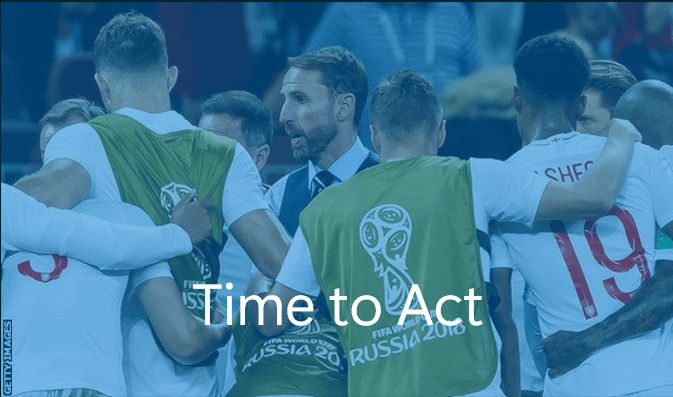
Gareth Southgate’s performance as the manager of the England men’s football team made a refreshing change after years of wasted hopes. You are probably already aware that it wasn’t just based on shouty motivational interventions from the touchline or in the dressing-room. In fact, his approach to leadership has made Gareth a role-model for leaders in business and beyond.
He’s shared many insights this year in a book, Dear England, Lessons in Leadership. Much of it is designed to help leaders build self-awareness, connect with their teams and inspire great performance.
One chapter caught my eye for its relevance to crisis management. When The Whistle Blows describes how the England manager reversed decades of failure in penalty shootouts at major tournaments. Southgate himself was one of the victims when England exited the European championships in 1996, after he missed against Germany.
He began with the data, assigning five analysts to look at dozens of shootouts and learn what factors contribute to success. They then broke the process down into four phases leading up to the kick and worked out what the team – players and support staff – could best do at each stage. (You’ll have to read his book to see what they did).
Data analytics only get you so far. It’s players who take penalties and they have all the human strengths and vulnerabilities you’ll find in your own team. This was how he went about ensuring they were as well-prepared as possible, starting with a guiding principle.
Look to control the process rather than the outcome
The process needs a clear plan, and the plan and the people executing it, develop through practice. So, prepare your people for the pressure of taking penalties – or having to deal with an unexpected cyber-attack or crisis – by simulating the conditions in which they’ll need to perform at their best, and making the rehearsal as real as possible.
Normalise the pressure, says Gareth. Let each team member understand their own role. In England’s case, that included where players, coaches and the support team all stood for each of those four phases, and how they would react to the penalties, scored or missed.
Communication is one of Gareth Southgate’s managerial assets. Passing on information, yes, where he advises precision, sharing only the essential at times of stress. But just as important, creating an environment in which the team is willing to share their own mistakes or concerns. Demonstrating empathy and the human approach. Because psychological safety matters if you want people to speak up when something’s not going well, or when they don’t know the answer.
Adaptability is a core strength for leaders in a crisis or under pressure. Southgate’s leadership team planned for different scenarios, building capability to respond to the unexpected. They also allowed for the fact that key players might be injured or unable to fulfil their normal role. It’s very rare to have all your first choices available when the moment’s upon you, so alternates have to be identified and equally well-prepared.
You’ll have heard defeated athletes, I’m sure, talking about the positives they can take from their performance. The importance of mindset in sport is well-understood. Is this the point at which the parallel starts to break down? I think not.
Making decisions in a crisis requires confidence, from the leader and from the individuals who make up the team. Because you’ll need to make rapid decisions, often with limited information. Identifying what’s going right from the outset, following the process and chalking up the wins, reduces the fear that leads to prevarication or worse, paralysis.
A confident leader accepts the accountability for the team’s performance. Knowing that the process was executed as planned and that the team carried out their roles to the best of their ability.
A final insight to take away and which aligns with my experience of working in organisations that manage crises well.
The behaviours that make for successful penalty shootouts or enable an organisation to respond under extreme pressure, cannot suddenly be switched on when it matters most. They are the ultimate expression of the health of the organisational culture, the way things are done day-in, day-out.
If you have questions about your organisation’s readiness, we’d welcome a conversation. Crisis Capable
Tom Wingate – With 30 years in policing and senior roles covering threat, risk and physical security in global cloud environments, Tom is now a consultant advising organisations on crisis leadership and decision-making under pressure.
Martin Fewell – Former Director of Media and Communications, Met Police, 2012- 2017, with other roles in sport and higher education dealing with COVID and the impact of the Hamas attack. Now a consultant helping leaders develop crisis capability and manage risk.


Leave a Reply